Understanding the Stages of Readiness: Why Real Change Starts With Honesty

Paul Taft • December 1, 2025

On this week’s blog, I wanted to touch on the Stages of Readiness (also known as the Stages of Change Theory).

Now that we’re officially in the holiday season, fitness and health messaging is everywhere — Facebook ads, commercials, posters while you shop — all pushing the idea of a “NEW YEAR… NEW YOU” without offering any real context about what it means to be healthy, to age well, and to live a life where you can do the things you love for as long as possible. In other words, to stay out of the nursing home.

Just the other day I got an email from Orange theory telling me that if I commit for one month, I get the next one free. The mind games are endless. These companies know motivation fades. They know that nothing changes unless we change our habits, our lifestyle, and the smallest daily actions that actually move the needle forward.


What Is the Stages of Change Theory?

The Stages of Change Theory explains how people progress through a series of steps when changing problematic behaviors or adopting new, healthier ones. The stages are:

  • Precontemplation — No intention of changing. The individual may not even recognize the behavior as problematic.
  • Contemplation — Awareness emerges. The person starts thinking about change but hasn’t committed yet.
  • Preparation — The individual intends to take action soon and begins planning.
  • Action — Actual behavior change takes place through intentional strategies and new habits.
  • Maintenance — Sustaining the new behavior over time while working to prevent relapse.
  • Relapse — A return to old habits, which is a normal part of the process, not a failure.


Lets Look at Maintenance

“Exercise” for me has been a lifelong commitment — I’ve lived in the maintenance stage for years. And to this day what keeps me from falling back is why I started. I still remember what it felt like to grow up enduring childhood obesity. I remember taking my shirt off in front of my parents’ mirror and crying, wondering why I felt the way I did. I wondered if I’d spend my life using a nebulizer or relying on rescue inhalers every time I exercised. Or being on Prednisone off and on for the rest of  my life.  I wondered why I was bigger than most of my friends. The list is endless.

Ironically, as I kept going, exercise became my escape. It gave me identity, direction, and a sense of control. It helped me grow physically and gave me opportunities I never thought I’d have. 

Now Lets flip the script and discuss something  I believe to be extremely important:

And that is Action.

You have a thought — put that thought to the test and act on it.
Simple, right? But if it were easy, everyone would do it.

Why I Say “Exercise” and Not “Fitness”

I say exercise because fitness, to me, is bigger than workouts.
Fitness is what we pursue daily to become better human beings.
It’s what keeps us healthy for our loved ones.
It’s what allows us to fight chronic disease, maintain our mental health, and stay in the game for the long haul.

As a coach, what humbles me most are the things I struggle with. The things I have to stare down and acknowledge as being real.

It brings me right back to being 12 years old, 30 pounds overweight, staring in the mirror wondering how I got there — knowing deep down that all I wanted was to feel better. Nothing stopped me from doing sit-ups and push-ups back then. The action was simple.

But mental health… that’s a different story. And this is why Fitness is much more than hosting a daily workout for people to me.

In 2024, I sat at a local Coffee shop with our team from 4 Elements Direct Primary Care. We shared our goals for the year, and mine was simple:
Work on my mental health.

Now we’re about to hit 2026, and I just reached out to a therapist to see if she was taking new clients.

Two years of going back and forth — telling myself I needed some help, then convincing myself I didn’t.

And here’s the truth:
These things aren’t fixed by the computer.
They’re not fixed by self-help books.
Not by AI.

They’re fixed by acknowledging your struggles.
By asking for help from real human beings.
By committing to growth — even when it drags you into the trenches you must be willing to keep going.

Why Our Gym Is Different

This is exactly why we are different — not just from gyms in our area, but from gyms in general. We don’t just specialize in exercise. We specialize in fitness across the continuum from Sickness to Wellness and everything in between.

A coach I respect, Cody Smith, recently posted something that resonated deeply with me as a gym owner:

Clients can now get GLP-1 medications from their doctor.
AI-powered meal plans.
AI-powered workouts.
Cheap macro plans.
And weight loss clinics everywhere.

These things aren’t the enemy.
They eliminate shallow, low-value coaching.

Because what we do is different.

We specialize in fitness.
We don’t just host a daily workout.
We educate.
We build intentional programs from within.
We coach behavior and identity for people who want more.
We collaborate with local practitioners.
We provide a real roadmap for longevity — starting the moment you walk through the door I will personally hold your hand. Because I know this shit is hard you just have to be willing to go through the trenches. This is Transformation, this is where real stories are created. You know the ones you see on TV, thinking they are impossible. 

We view fitness as the prescription to move, feel, and live better over your entire lifespan.

And that’s the journey — through all the stages of readiness — that we walk with you.

,Coach Paul

Recent Posts

By Paul Taft • November 24, 2026
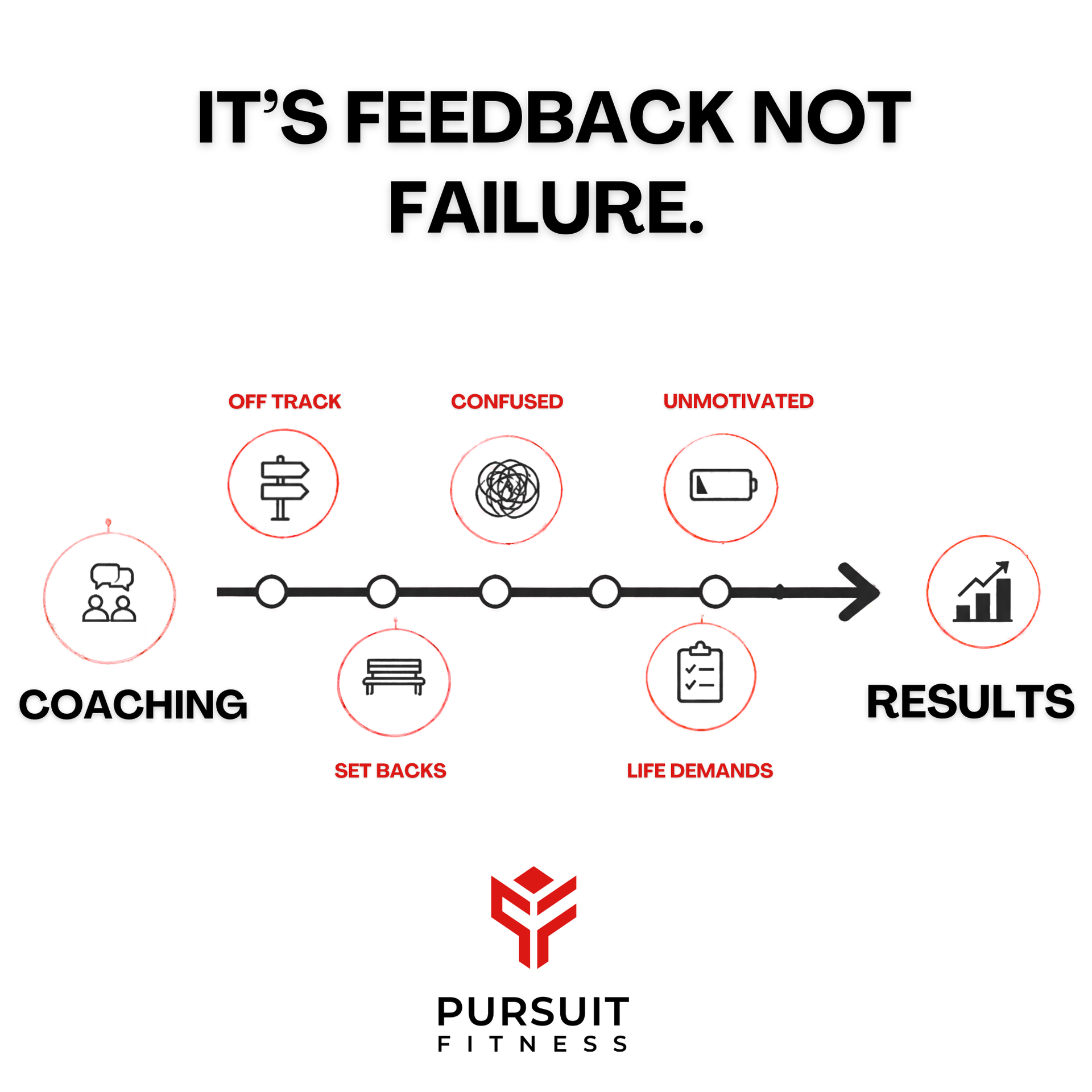
It's Feedback, Not Failure. The other day, I was going through some old notes from a nutrition course I completed many years ago. One of my notes caught my attention. It reads "It's feedback, not failure." The lecture was discussing the coach-to-client relationship, and the feedback loops that exist alongside trust and communication. A big emphasis was placed on how we perceive failure. Rather than viewing it as something negative, we should look at it as information. Data points that give both the coach and the client an opportunity to learn, reflect, and make adjustments. In other words, they're lessons worth exploring. A lot of people believe they don't need a coach, a mentor, or someone to help guide them along their journey, whatever that journey may be. Or maybe they don't see the value in it. But sometimes, without an outside perspective, we can find ourselves stuck in our own feedback loops. We convince ourselves that what we're doing is working, avoid the uncomfortable conversations, and do whatever it takes to stay within our comfort zone. Continuing to create the narrative that it must not be a "me" problem. Maybe you've been there. Maybe this is you now. Maybe you've started and stopped your fitness journey more times than you can count. Maybe you've tried the diet, veered off course, and eventually found yourself right back where you started. The question is, what did you take away from that experience? Did you learn from it ? When we start something new, feedback is how we learn. As we begin to push ourselves and move outside our comfort zones, things don't always go to plan. There will be setbacks, missed targets, and moments where we fall short of what we set out to achieve. That's part of the process. The other day i found myself having a conversation with a patient regarding what makes a great coach. My first thought was on feedback. Over the years, one of the things I've come to admire most about high-level coaches or mentors is their ability to deliver feedback. Whether it's on the coaching floor, during a training session, or in a one-to-one conversation, the ability to communicate effectively is an incredibly valuable skill. A great coach helps you recognize what's happening, understand where things might be going wrong, and make the necessary adjustments. They help bring you back to the bigger picture when the smaller setbacks threaten to take you off course. And something I've come to appreciate even more over time is that less is often more when it comes to feedback. Keep it simple. Keep it within the individuals reach. Not everyone learns the same way. Not everyone communicates the same way. And certainly, not everyone receives feedback in the same way. Some people need a little encouragement. Others need a direct conversation. Some need time to process things before they're ready to act. It's up to the coach to recognize those differences and understand how best to approach each individual. Because coaching isn't simply about pointing out what someone is doing wrong. It's about knowing when to speak, what to say, how to say it, and sometimes when to simply listen. Ultimately, the goal isn't to eliminate failure. Proper coaching creates an environment where people feel comfortable enough to fail and learn from it all to come back again tomorrow and try again. Where setbacks become conversations rather than reasons to quit. Where feedback builds confidence rather than takes it away. And where the relationship between coach and client is built on trust, honesty, and a shared understanding that progress isn't always a straight line. Sometimes, the most important part of the journey isn't getting everything right. It's having someone in your corner who helps you understand whats happening when you don't because your coach has been there 1000x already. , Coach Paul
By Paul Taft • November 17, 2026
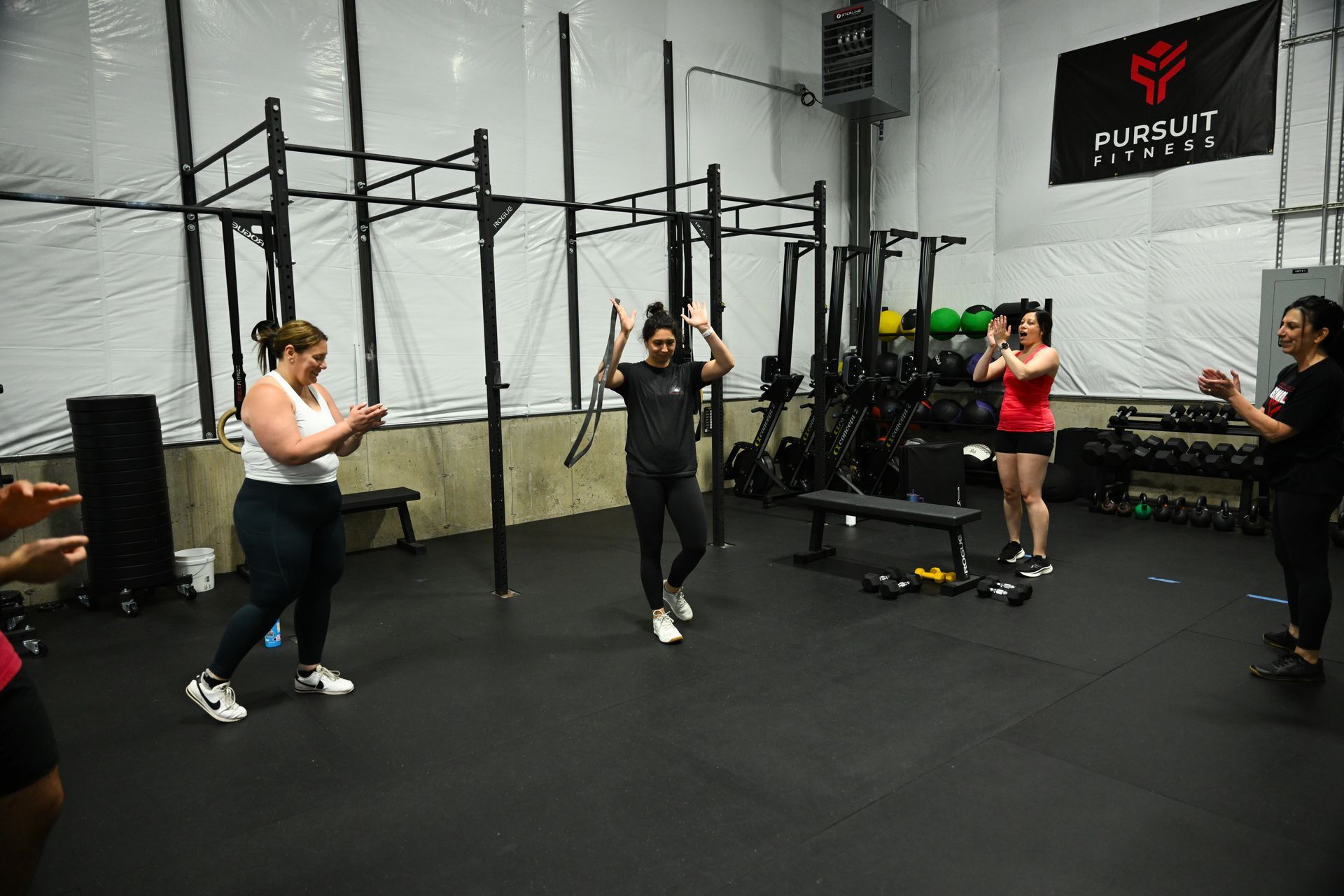
It is in the journey of developing these things that confidence is built. This is exactly why I place Confidence last. Just as we place Intensity last on the Mechanics, Consistency, Intensity spectrum. Confidence is earned and built in the process.
By Paul Taft • November 10, 2026
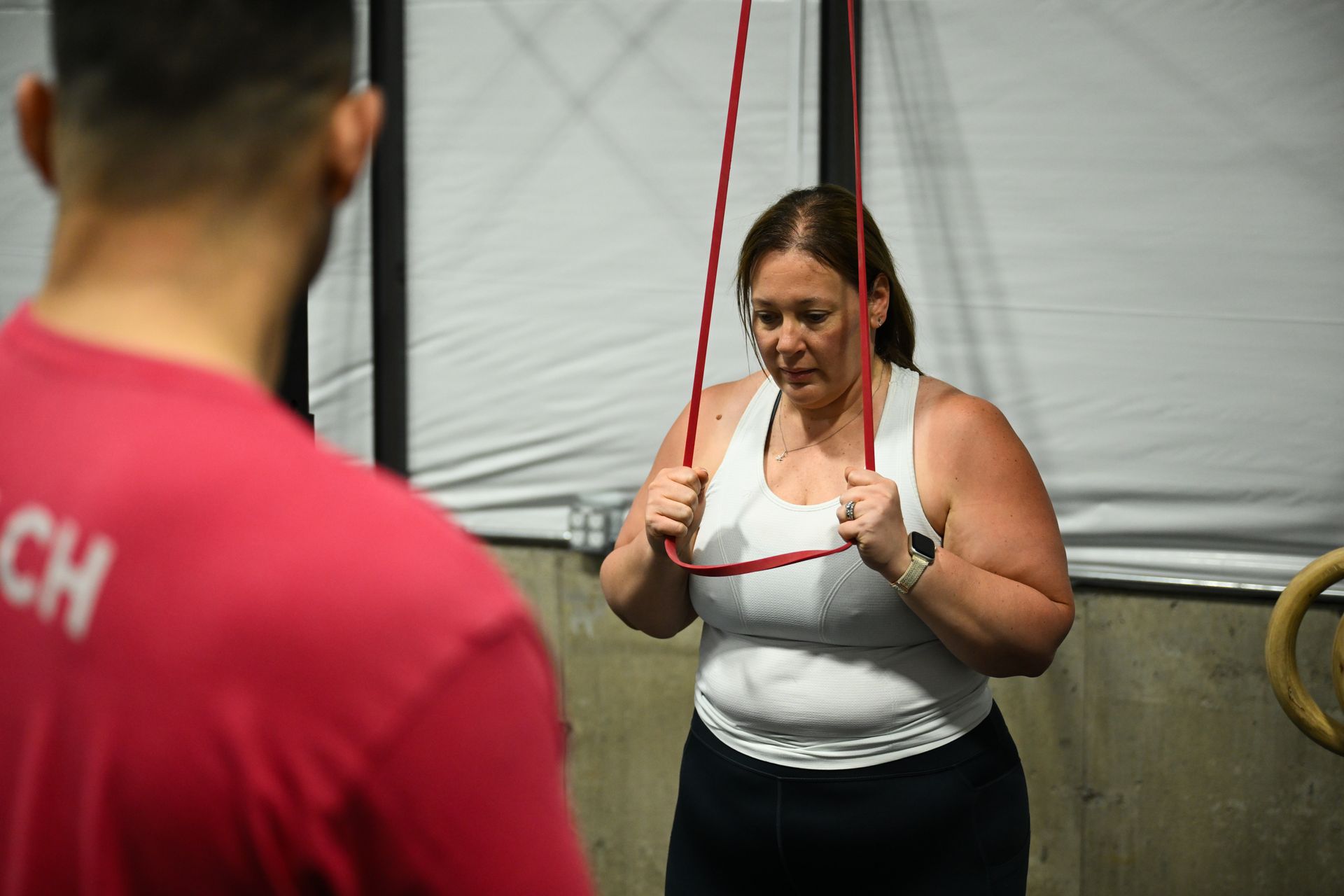
Consistency is key to personal transformation in fitness. Join us to start your journey today!
By Paul Taft • April 6, 2026
The other day I hopped on my weekly mentorship call. What struck me most wasn’t just everything my mentor had going on, it was h...
By Paul Taft • March 11, 2026
Yesterday I had a conversation with a patient at our office who is trying to find her way back to a healthier lifestyle. We spent ...
Two men standing in a gym, one in a neon yellow shirt and one in a black shirt that says “DON’T WEAKEN.”
By Paul Taft • February 25, 2026
In 2020, I graduated from nursing school and began my career on a post–cardiac surgery floor. I cared for patients recovering fr...
By Paul Taft • February 18, 2026
Time is a funny thing. We live in a world of go,go,go. We Workout to a clock. We rush to the next appointment. We Wait to clock ou...
By Paul Taft • January 14, 2026
For us a Good training day isn’t defined by how hard you can push—it’s defined by how well the work is set up so real coachi...
Graph comparing work accomplished vs energy expended, showing efficient technique steeper than inefficient technique.
By Paul Taft • December 30, 2025
Last week in our blog post, we touched on the importance of the general warm-up. For more on what that may look like here is our g...
By Paul Taft • December 16, 2025
Part 1: Our Warm-Up Protocol This is a multi-part blog series where we break down how we structure training at Pursuit Fitness. 1:...