
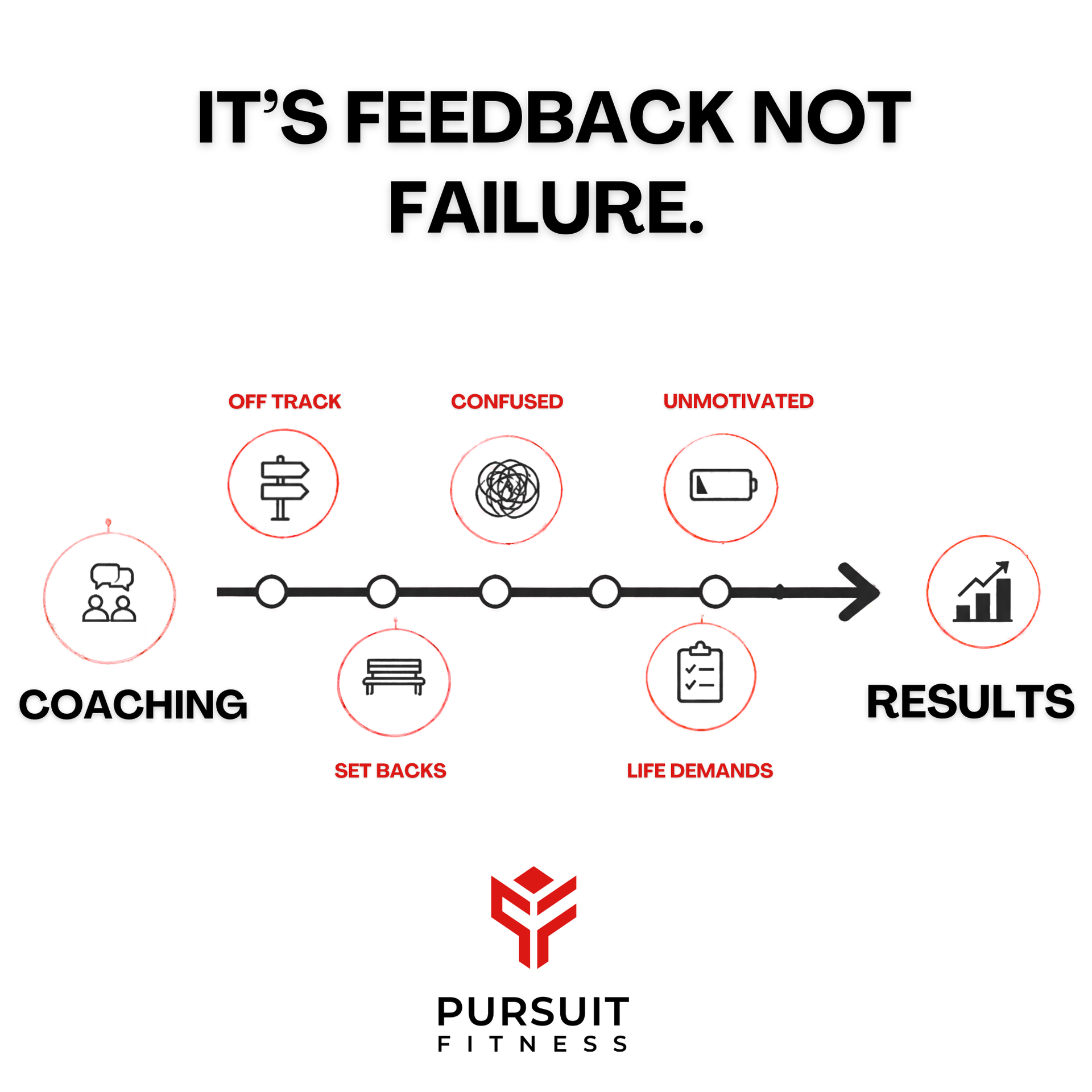
It's Feedback, Not Failure. The other day, I was going through some old notes from a nutrition course I completed many years ago. One of my notes caught my attention. It reads "It's feedback, not failure." The lecture was discussing the coach-to-client relationship, and the feedback loops that exist alongside trust and communication. A big emphasis was placed on how we perceive failure. Rather than viewing it as something negative, we should look at it as information. Data points that give both the coach and the client an opportunity to learn, reflect, and make adjustments. In other words, they're lessons worth exploring. A lot of people believe they don't need a coach, a mentor, or someone to help guide them along their journey, whatever that journey may be. Or maybe they don't see the value in it. But sometimes, without an outside perspective, we can find ourselves stuck in our own feedback loops. We convince ourselves that what we're doing is working, avoid the uncomfortable conversations, and do whatever it takes to stay within our comfort zone. Continuing to create the narrative that it must not be a "me" problem. Maybe you've been there. Maybe this is you now. Maybe you've started and stopped your fitness journey more times than you can count. Maybe you've tried the diet, veered off course, and eventually found yourself right back where you started. The question is, what did you take away from that experience? Did you learn from it ? When we start something new, feedback is how we learn. As we begin to push ourselves and move outside our comfort zones, things don't always go to plan. There will be setbacks, missed targets, and moments where we fall short of what we set out to achieve. That's part of the process. The other day i found myself having a conversation with a patient regarding what makes a great coach. My first thought was on feedback. Over the years, one of the things I've come to admire most about high-level coaches or mentors is their ability to deliver feedback. Whether it's on the coaching floor, during a training session, or in a one-to-one conversation, the ability to communicate effectively is an incredibly valuable skill. A great coach helps you recognize what's happening, understand where things might be going wrong, and make the necessary adjustments. They help bring you back to the bigger picture when the smaller setbacks threaten to take you off course. And something I've come to appreciate even more over time is that less is often more when it comes to feedback. Keep it simple. Keep it within the individuals reach. Not everyone learns the same way. Not everyone communicates the same way. And certainly, not everyone receives feedback in the same way. Some people need a little encouragement. Others need a direct conversation. Some need time to process things before they're ready to act. It's up to the coach to recognize those differences and understand how best to approach each individual. Because coaching isn't simply about pointing out what someone is doing wrong. It's about knowing when to speak, what to say, how to say it, and sometimes when to simply listen. Ultimately, the goal isn't to eliminate failure. Proper coaching creates an environment where people feel comfortable enough to fail and learn from it all to come back again tomorrow and try again. Where setbacks become conversations rather than reasons to quit. Where feedback builds confidence rather than takes it away. And where the relationship between coach and client is built on trust, honesty, and a shared understanding that progress isn't always a straight line. Sometimes, the most important part of the journey isn't getting everything right. It's having someone in your corner who helps you understand whats happening when you don't because your coach has been there 1000x already. , Coach Paul
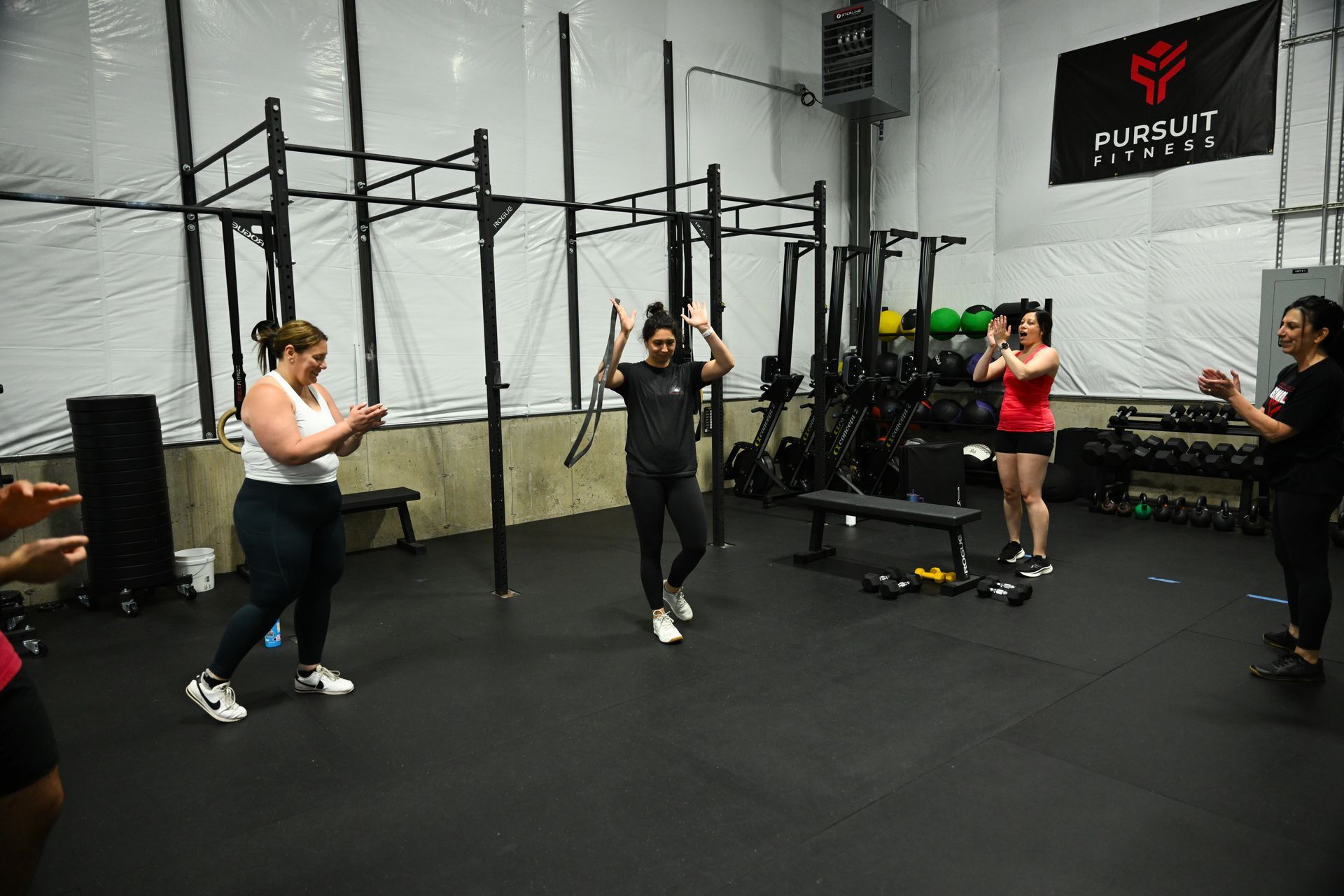
It is in the journey of developing these things that confidence is built.
This is exactly why I place Confidence last. Just as we place Intensity last on the Mechanics, Consistency, Intensity spectrum. Confidence is earned and built in the process.
The other day I hopped on my weekly mentorship call. What struck me most wasn’t just everything my mentor had going on, it was h...
Yesterday I had a conversation with a patient at our office who is trying to find her way back to a healthier lifestyle. We spent ...

In 2020, I graduated from nursing school and began my career on a post–cardiac surgery floor. I cared for patients recovering fr...
Time is a funny thing. We live in a world of go,go,go. We Workout to a clock. We rush to the next appointment. We Wait to clock ou...
For us a Good training day isn’t defined by how hard you can push—it’s defined by how well the work is set up so real coachi...

Last week in our blog post, we touched on the importance of the general warm-up. For more on what that may look like here is our g...
Part 1: Our Warm-Up Protocol This is a multi-part blog series where we break down how we structure training at Pursuit Fitness. 1:...
The midline includes the abdominals, obliques, spinal erectors, hips, and pelvis — all working together as a strong foundation t...