“Eat This Not That”

Paul Taft • April 9, 2025

The Smallest Nutrition Changes That Lead to Big Results

When I was 12 Years old I lost Over 30 Pounds and since then it has been my mission to improve others quality of life. I found health through fitness and as I noticed myself begin to feel results I began to focus more on my nutrition. My parents began to bring in healthier food in the house and those late night Mcdonalds trips after football practice slowly went away. I can’t help but become overwhelmed by the advice out there nowadays when it comes to nutrition and just about everything else lol.

The all or nothing approach grabs peoples attention and makes them feel like they need to be a certain way in order to experience results. This got me thinking of a book my Mom actually picked up from the store one day and brought it home when we were starting to eat a bit better. “Eat This not that”. If your not familiar with this book it would simply show you healthier alternatives to foods that you may be over consuming on. With this I was able to get a better understanding of the nutritional value of food & how things like excessive calories & high sugar can affect my weight. Things as a young teen I had no idea about.

Fitness Blog in Suffield, CT

Moral of the story, it’s easy to feel overwhelmed by the idea of “Change”. With countless diets, trendy foods, and endless advice on social media, it’s hard to know where to start. Than I remember what it takes to create change in the first place. It’s not the all or nothing approach but the small moments you tell yourself for example “today I will swap my soda out for a sugar free soda” & you actually do it !

With that being said here are some of the tiniest nutritional changes that, over time, can lead to big results:

1. Swap Sugary Drinks for Sugar free Options/ Water or Herbal Teas

Sugary drinks, like sodas, energy drinks, and even sweetened coffee, can add up to hundreds of calories each day often times not resulting in calories and or sugar we intended on taking in. They can also spike your blood sugar, leaving you feeling tired and hungry shortly after consumption. Replacing just one sugary drink be an easy win.

2. Add One Extra Serving of Vegetables Per Day

It’s easy to fall short when it comes to vegetables—whether you’re in a rush, or simply don’t enjoy them. However, adding just one extra serving of vegetables to your daily meals can have a profound impact on your health. You don’t need to overhaul your diet; just add a handful of spinach to your morning smoothie, toss a few extra veggies into your stir-fry, or snack on carrot sticks instead of chips.

Vegetables are packed with fiber, vitamins, and minerals that help regulate digestion, improve immune function, and fight inflammation. A single serving can provide the nutrients your body needs, and the fiber will keep you feeling fuller for longer, helping with weight management.

3. Switch to Whole Grains

If you’re currently eating refined grains—like white bread, pasta, or rice—switching to whole grains is a simple but effective way to improve your diet. Whole grains such as quinoa, brown rice, and whole-wheat bread contain more fiber, B vitamins, and minerals compared to their refined counterparts. This small swap can improve your energy levels and keep you feeling fuller longer, preventing overeating later in the day.

4. Include Protein with Every Meal

Protein is an essential nutrient that supports muscle growth, keeps your skin and hair healthy, and plays a crucial role in hunger regulation. Adding a source of protein to each meal—whether it’s eggs, legumes, nuts, or lean meats—can help keep you satisfied and prevent mindless snacking. If I were to pick any of these to start with adding protein into my meals would be pretty close to #1 on my list.

Including protein in every meal can stabilize blood sugar levels, reduce cravings, and support lean muscle mass. This small shift can lead to better weight management and improved overall health.

5. Mind Your Portion Sizes

You don’t always have to change what you eat; sometimes, it’s simply about adjusting how much you eat. Paying attention to portion sizes, especially for calorie-dense foods like nuts, oils, or cheese, can make a big difference without feeling deprived. One simple trick is using smaller plates, which naturally help you eat less without feeling like you’re missing out.

Reducing portion sizes can help with weight management and prevent overeating, especially when eating out or indulging in calorie-rich foods. This subtle adjustment can lead to steady, sustainable changes in your eating habits without drastic sacrifices.

6. Mindful Eating: Slow Down and Enjoy Your Food

In today’s busy world, we often eat on autopilot, rushing through meals without paying much attention to what or how much we’re eating. Slowing down, savoring each bite, and listening to your body’s hunger cues can lead to more mindful eating. Try setting aside time for meals, chewing your food thoroughly, and avoiding distractions like your phone or TV.

Mindful eating helps you recognize when you’re full, preventing overeating. It also encourages healthier digestion, reduces stress around food, and can improve your relationship with eating.

7. Hydrate First Thing in the Morning

Many of us wake up dehydrated after a long night’s sleep. Drinking a glass of water first thing in the morning rehydrates your body, jump-starts your metabolism, and sets a positive tone for the day. It’s a simple habit that can make a big difference in your overall energy levels and digestion. I’d be lying if I said I do this every morning this is certainly something I continue to struggle with as the first thing that is on my mind each morning is coffee and lots of it 🙂

8. Reduce Processed Snack Consumption

Snacking on processed foods like chips, cookies, and crackers may be convenient, but they’re often packed with unhealthy fats, sugar, and preservatives. A simple change is to swap out these processed snacks for healthier alternatives sometimes this may take some trial and error & more time in the grocery store looking at nutrition labels for the servings sizes of certain snacks. Eventually working towards snacks that are more wholesome in nature like nuts/ fruits etc.

Reducing processed snacks helps lower your intake of unhealthy fats and sugars, improving overall health, digestion, and energy. Healthier snacks can keep you satisfied between meals without the blood sugar crashes that come with processed foods.


The Bottom Line: Small Changes, Big Results

You don’t have to make huge shifts in your diet to see real results. Whether it’s drinking more water, adding a serving of vegetables, or paying attention to portion sizes, the smallest changes can have a significant impact on your health. The key is consistency. Over time, these minor adjustments become habits that improve your energy, digestion, and overall well-being.

Start small, stay consistent, and watch as these small changes lead to big, positive results in your nutrition and health. And if you need any help with this our door is always open here at Pursuit Fitness 🙂

,Coach Paul

Recent Posts

By Paul Taft • November 24, 2026
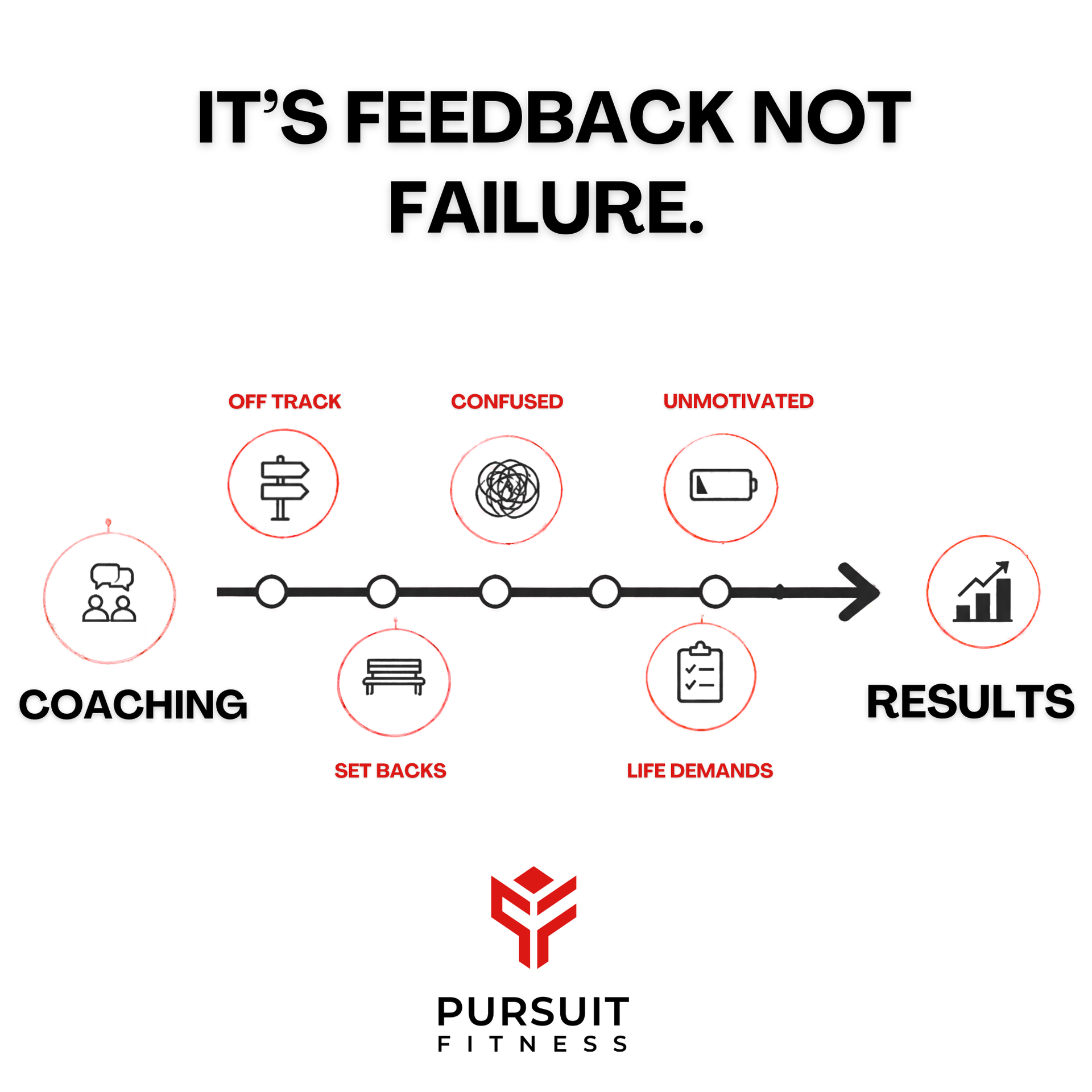
It's Feedback, Not Failure. The other day, I was going through some old notes from a nutrition course I completed many years ago. One of my notes caught my attention. It reads "It's feedback, not failure." The lecture was discussing the coach-to-client relationship, and the feedback loops that exist alongside trust and communication. A big emphasis was placed on how we perceive failure. Rather than viewing it as something negative, we should look at it as information. Data points that give both the coach and the client an opportunity to learn, reflect, and make adjustments. In other words, they're lessons worth exploring. A lot of people believe they don't need a coach, a mentor, or someone to help guide them along their journey, whatever that journey may be. Or maybe they don't see the value in it. But sometimes, without an outside perspective, we can find ourselves stuck in our own feedback loops. We convince ourselves that what we're doing is working, avoid the uncomfortable conversations, and do whatever it takes to stay within our comfort zone. Continuing to create the narrative that it must not be a "me" problem. Maybe you've been there. Maybe this is you now. Maybe you've started and stopped your fitness journey more times than you can count. Maybe you've tried the diet, veered off course, and eventually found yourself right back where you started. The question is, what did you take away from that experience? Did you learn from it ? When we start something new, feedback is how we learn. As we begin to push ourselves and move outside our comfort zones, things don't always go to plan. There will be setbacks, missed targets, and moments where we fall short of what we set out to achieve. That's part of the process. The other day i found myself having a conversation with a patient regarding what makes a great coach. My first thought was on feedback. Over the years, one of the things I've come to admire most about high-level coaches or mentors is their ability to deliver feedback. Whether it's on the coaching floor, during a training session, or in a one-to-one conversation, the ability to communicate effectively is an incredibly valuable skill. A great coach helps you recognize what's happening, understand where things might be going wrong, and make the necessary adjustments. They help bring you back to the bigger picture when the smaller setbacks threaten to take you off course. And something I've come to appreciate even more over time is that less is often more when it comes to feedback. Keep it simple. Keep it within the individuals reach. Not everyone learns the same way. Not everyone communicates the same way. And certainly, not everyone receives feedback in the same way. Some people need a little encouragement. Others need a direct conversation. Some need time to process things before they're ready to act. It's up to the coach to recognize those differences and understand how best to approach each individual. Because coaching isn't simply about pointing out what someone is doing wrong. It's about knowing when to speak, what to say, how to say it, and sometimes when to simply listen. Ultimately, the goal isn't to eliminate failure. Proper coaching creates an environment where people feel comfortable enough to fail and learn from it all to come back again tomorrow and try again. Where setbacks become conversations rather than reasons to quit. Where feedback builds confidence rather than takes it away. And where the relationship between coach and client is built on trust, honesty, and a shared understanding that progress isn't always a straight line. Sometimes, the most important part of the journey isn't getting everything right. It's having someone in your corner who helps you understand whats happening when you don't because your coach has been there 1000x already. , Coach Paul
By Paul Taft • November 17, 2026
It is in the journey of developing these things that confidence is built. This is exactly why I place Confidence last. Just as we place Intensity last on the Mechanics, Consistency, Intensity spectrum. Confidence is earned and built in the process.
By Paul Taft • November 10, 2026
Consistency is key to personal transformation in fitness. Join us to start your journey today!
By Paul Taft • April 6, 2026
The other day I hopped on my weekly mentorship call. What struck me most wasn’t just everything my mentor had going on, it was h...
By Paul Taft • March 11, 2026
Yesterday I had a conversation with a patient at our office who is trying to find her way back to a healthier lifestyle. We spent ...
Two men standing in a gym, one in a neon yellow shirt and one in a black shirt that says “DON’T WEAKEN.”
By Paul Taft • February 25, 2026
In 2020, I graduated from nursing school and began my career on a post–cardiac surgery floor. I cared for patients recovering fr...
By Paul Taft • February 18, 2026
Time is a funny thing. We live in a world of go,go,go. We Workout to a clock. We rush to the next appointment. We Wait to clock ou...
By Paul Taft • January 14, 2026
For us a Good training day isn’t defined by how hard you can push—it’s defined by how well the work is set up so real coachi...
Graph comparing work accomplished vs energy expended, showing efficient technique steeper than inefficient technique.
By Paul Taft • December 30, 2025
Last week in our blog post, we touched on the importance of the general warm-up. For more on what that may look like here is our g...
By Paul Taft • December 16, 2025
Part 1: Our Warm-Up Protocol This is a multi-part blog series where we break down how we structure training at Pursuit Fitness. 1:...